













7 October, 2026



The most attractive porcelain slab is not always the best choice for a busy commercial setting. A hotel lobby, office corridor, retail store, or restaurant must balance design with safety, cleaning, glare, and long-term wear.
Porcelain slabs can be used for floors, reception areas, feature walls, counters, façades, and other large surfaces. Yet each application has different needs. This guide compares the best porcelain slab finishes for commercial spaces, explores practical color choices, and explains what to check before final specification.
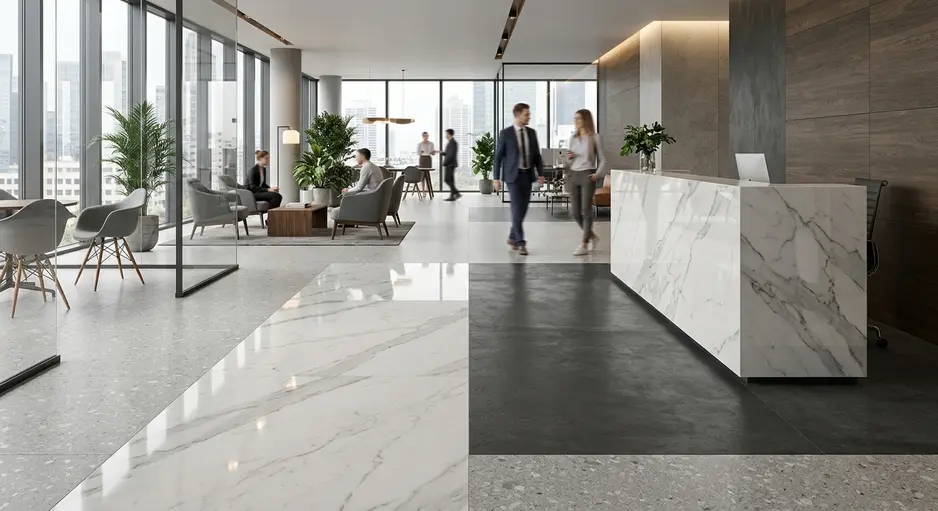
Finish and color affect how a commercial interior looks, feels, and performs. The right combination can support easy cleaning, improve visual comfort, and strengthen the brand experience. The wrong choice may show dirt, create glare, or prove unsuitable for the intended use.
A surface finish can influence grip, visible wear, scratch visibility, and cleaning needs. Low-glare surfaces are often practical for busy corridors and office interiors. Textured options may offer useful traction in selected locations, although deeper textures can hold more dirt.
Not every slab or finish is approved for flooring. Before choosing porcelain slabs for high traffic areas, review current manufacturer data and the relevant floor-use classification. Product-specific testing matters more than general claims about polished, matte, or textured materials.
Light colors can make a compact room feel open and bright. Dark tones create depth and drama, but they may reveal dust, fingerprints, water marks, or pale debris. Warm neutrals tend to feel welcoming in hospitality interiors, while cooler grays suit many modern offices and retail environments.
Always test porcelain slab colors under the actual project lighting. Warm lights can make white and gray surfaces appear creamier. Cool lights may reveal blue or green undertones that were not clear in a showroom.
A marble-look slab, for example, may be available with polished or matte porcelain slab surface finishes. Keeping these terms separate makes product comparisons easier.
Polished: Reflective and luxurious. Best for reception walls, hotel features, and approved low-risk floor applications. Check glare and floor suitability.
Matte: Soft and contemporary. Useful in offices, shops, corridors, and general interiors. Follow finish-specific cleaning guidance.
Satin: Offers a subtle sheen. It suits lounges, executive offices, and refined branded spaces. Confirm product availability and ratings.
Honed: Smooth and understated. Often considered for lobbies, offices, and upscale retail. Verify slip and maintenance data.
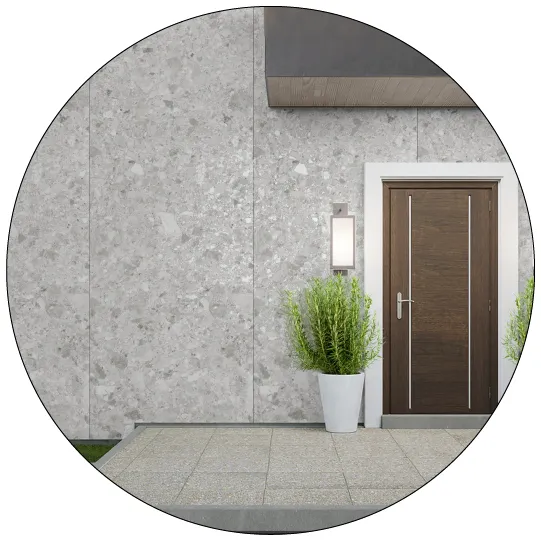
Textured: Tactile and grip-oriented. Suitable for selected entrances, wet locations, exterior areas, and walls. Deeper textures may need more cleaning.
Metallic or decorative: Bold and distinctive. Best for feature walls, display zones, and statement interiors rather than every surface.
A polished surface reflects light and brings out the depth of marble-look surfaces. It can create a premium result on hotel feature walls, reception desks, elevator surrounds, and luxury retail displays.
Reflection also makes glare, fingerprints, water marks, and fine scratches more noticeable. For flooring, never assume that a polished product is suitable based on appearance. Confirm that the exact slab is approved for the expected traffic, moisture, and maintenance conditions.
Matte and honed surfaces have an understated appearance that works well in office interiors, corridors, shops, and contemporary hotels. They pair easily with a neutral color palette, natural timber, metal, and simple furniture.
These finishes can also hide minor marks better than highly reflective surfaces. However, a matte surface is not automatically slip-resistant. Check the test results and intended application for each product.
A satin finish sits between polished and fully matte porcelain. It provides soft reflection without the mirror-like shine of a polished slab. This makes it appealing for executive offices, hotel lounges, boutiques, and premium common areas.
Satin is also useful when designers want a refined surface that responds gently to light. As with every finish, cleaning methods and floor-use ratings should be confirmed before ordering.
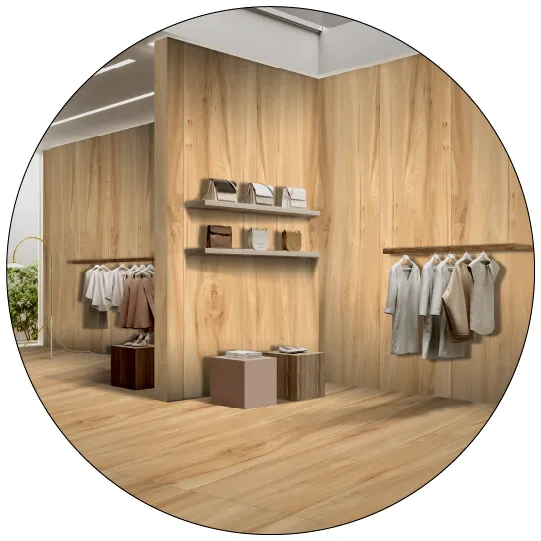
A textured finish adds depth and can support grip in selected entrances, exterior settings, and wet areas. It is also effective for porcelain slabs for commercial wall cladding, where tactile detail can give a plain wall more character.
Heavy texture may retain dust, grease, or cleaning residue. Create a mock-up and test the planned cleaning method when the surface will be near food, busy doors, or frequent spills.
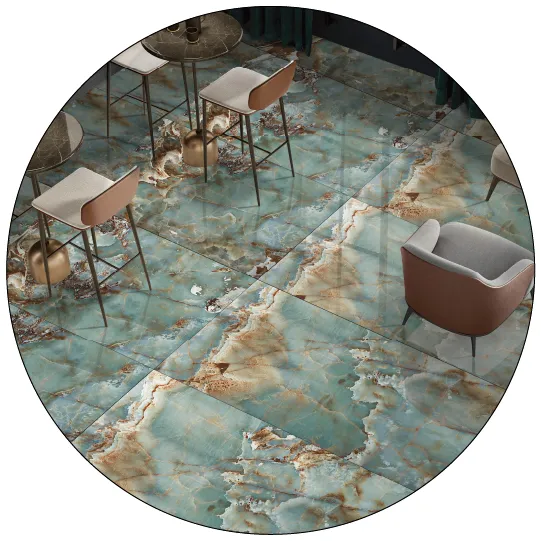
Metallic effect slabs can turn a reception backdrop, elevator lobby, or merchandise display into a strong brand feature. Marble, metal, and concrete are visual effects, so they may be supplied in more than one finish.
Expressive commercial porcelain slab designs are usually most effective when used with restraint. Pair a dramatic wall with quiet flooring and simple furniture to prevent visual overload.
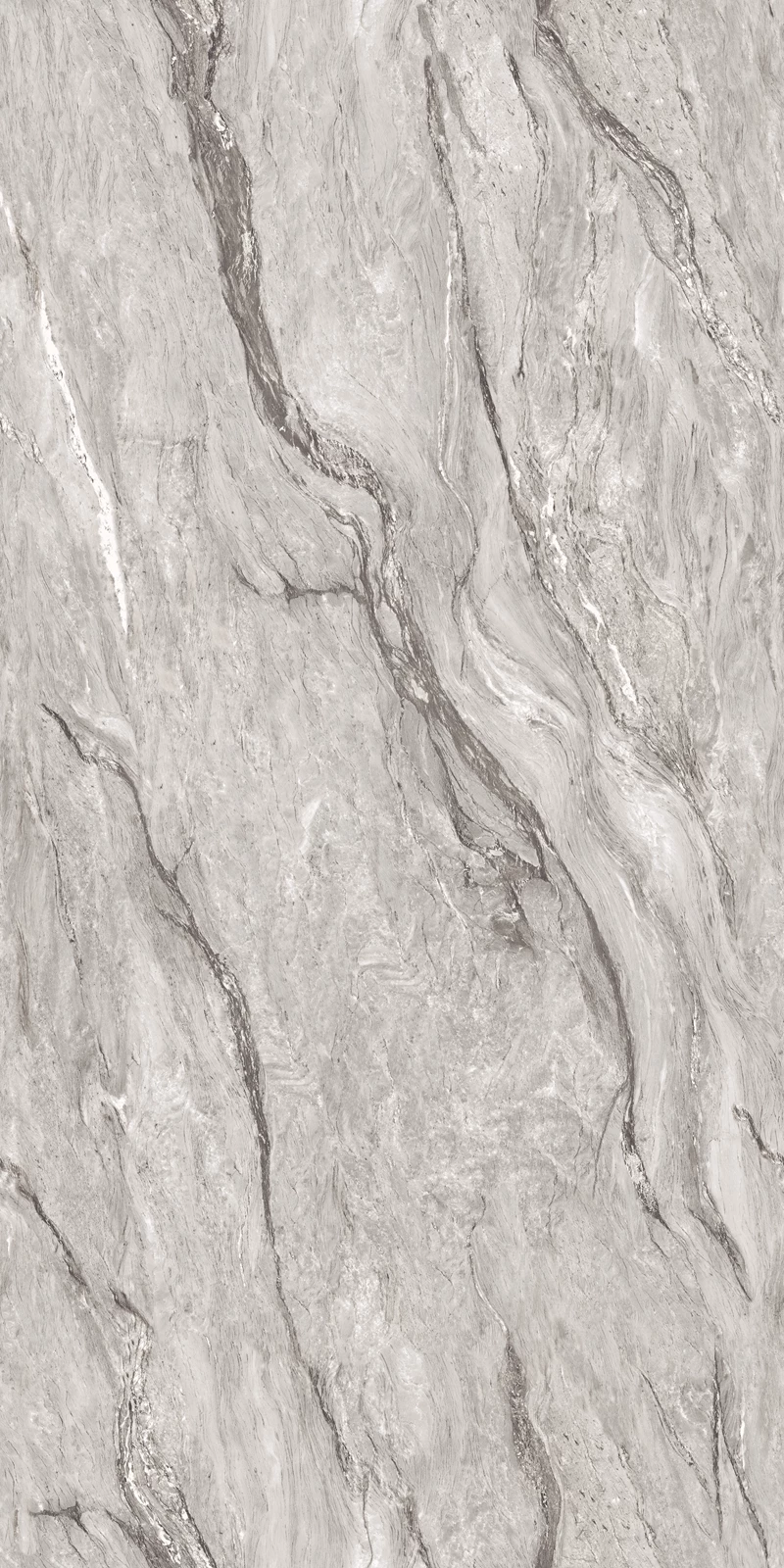
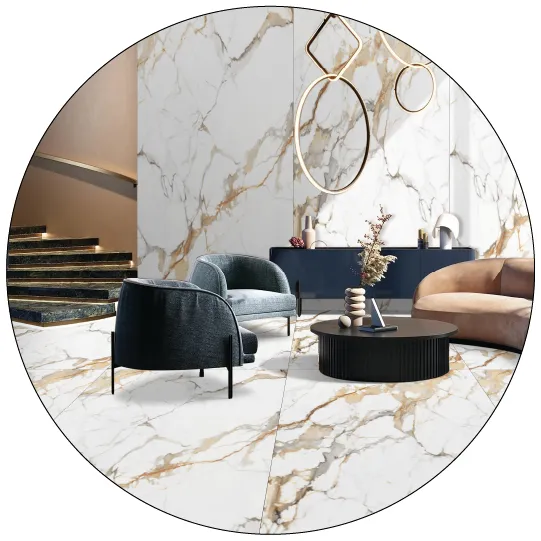
White, ivory, and lightly veined slabs can make hospitality interiors feel spacious and polished. They work well in hotel lobbies, washroom vanities, restaurants, reception walls, and luxury retail areas.
Choose warmer whites when the design includes warm lighting, brass, beige fabrics, or timber. Vein-continuous and book-matched layouts require careful slab selection, digital planning, fabrication, and installation.
Beige and greige are among the most flexible porcelain slab color options for commercial projects. They create a welcoming mood and coordinate with bronze, wood, natural fabrics, and biophilic design elements.
Warm neutrals can also be more forgiving than pure white or deep black in busy customer-facing areas. They are strong choices for wellness spaces, offices, restaurants, and hotels.
Concrete-look surfaces suit technology offices, coworking spaces, showrooms, and modern shops. Light gray can keep an interior open, while charcoal can define reception zones or guide movement through a large floor plan.
Compare undertones carefully. Several grays may look similar on their own but clash when blue-gray, green-gray, and brown-gray materials are placed together.
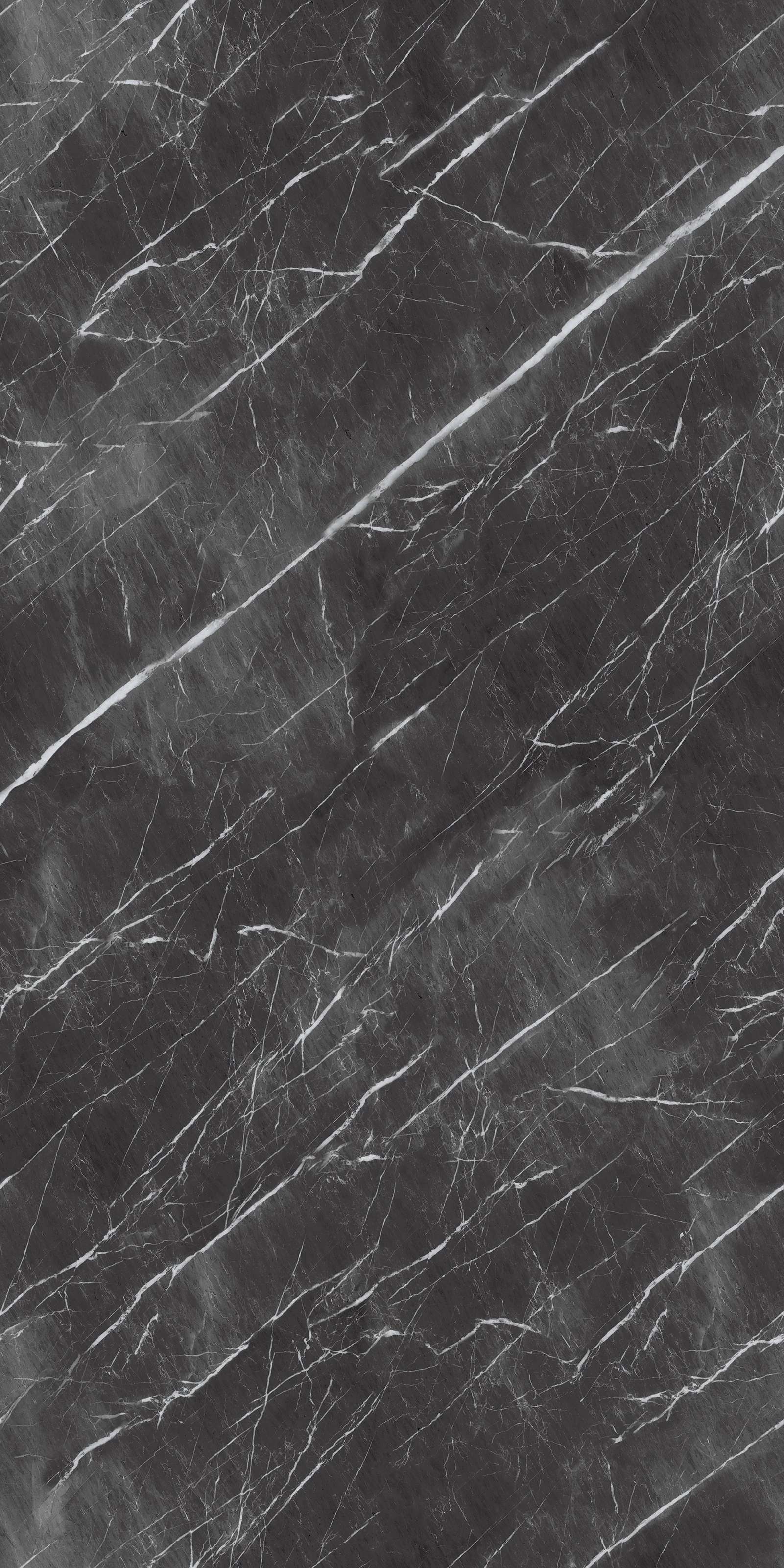
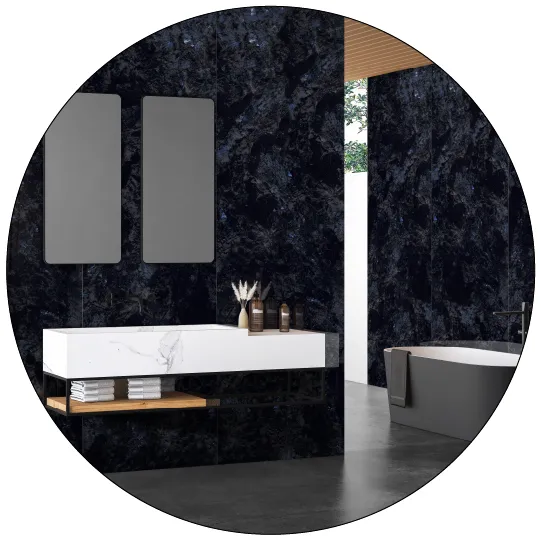
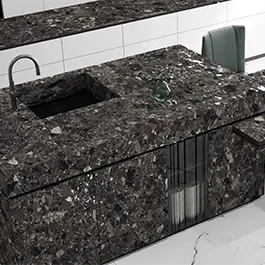
Black, charcoal, blue, dark green, and richly veined slabs can create memorable focal points. These colors work especially well on reception walls, display areas, counters, bars, and branded zones.
Before using a bold color scheme across a large area, consider room size and lighting. Dark surfaces may show fingerprints, dust, crumbs, or water spots more clearly.
Metal and stone effects fit restaurants, entertainment venues, statement offices, and high-end boutiques. Combine them with simple surroundings so the pattern remains intentional rather than distracting.
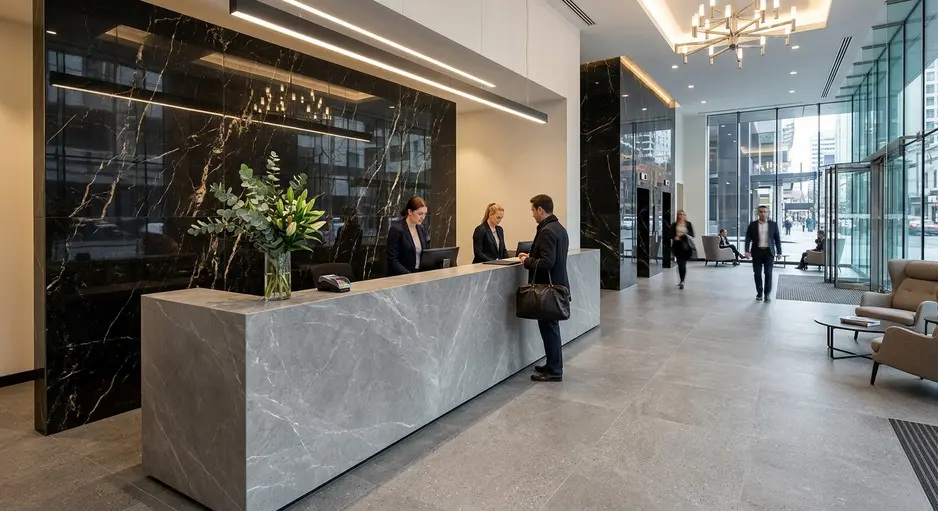
For high-traffic flooring, start with tested floor-use suitability, abrasion performance, cleanability, and slip considerations. A matte, honed, or lightly textured finish may be suitable, but the decision must rely on documentation for the exact product.
Entrances also need walk-off matting, frequent moisture control, and a practical cleaning plan. The slab alone cannot manage water and dirt brought in from outside.
Porcelain slab finishes for hotels and offices should match the desired atmosphere. Hotels often benefit from warm marble looks, beige stone effects, satin surfaces, and polished vertical features. Offices may favor matte concrete looks, greige patterns, and low-glare finishes.
Consider lighting, furnishings, acoustics, and the brand experience together. A finish that works in a softly lit lounge may feel harsh in a bright workplace.
Porcelain slabs for retail interiors should support the merchandise rather than compete with it. Neutral, easy-maintenance surfaces provide a clean background, while a bold marble or metallic effect can highlight checkout counters and display walls.
Also consider changing store layouts, visible scuffs, cleaning frequency, and how joints will align with fixtures.
Large format porcelain slabs for commercial spaces can reduce the number of visible joints and create a more continuous look. Common applications include reception walls, elevator surrounds, columns, washrooms, and façade systems.
Confirm the substrate, fixing system, panel thickness, slab weight, edge treatment, and local code requirements. Exterior and overhead installations may need an engineered mechanical fixing system.
For counters and bars, review stain, chemical, heat, impact, support, and edge-fabrication needs. Choose a pattern that does not make every crumb, fingerprint, or water mark obvious.
Sink cutouts, corners, overhangs, and joints require careful engineering. Qualified fabrication is essential because poor handling can damage edges or create weak points.
Use a warm white marble look with a floor-approved matte or satin surface underfoot. Reserve a polished finish for vertical focal areas. Warm lighting, timber, and brass can soften the overall scheme.
Practical insight: Place the most reflective premium porcelain slab finishes on walls rather than circulation routes when wet footwear or glare is a concern.
Combine light concrete or greige stone effects with a matte finish. Darker slabs can define reception branding or wayfinding. Keep undertones consistent across furniture, floors, and walls.
Practical insight: Low-glare surfaces can be more comfortable in brightly lit workspaces and often provide a clean background for photography and video calls.
Choose calm, easy-maintenance flooring and place expressive marble, metallic, or dark slabs on selected walls. Fewer visible joints can create a clean backdrop for products.
Practical insight: Let merchandise remain the main focus. Use strong patterns for controlled brand moments rather than covering every surface.
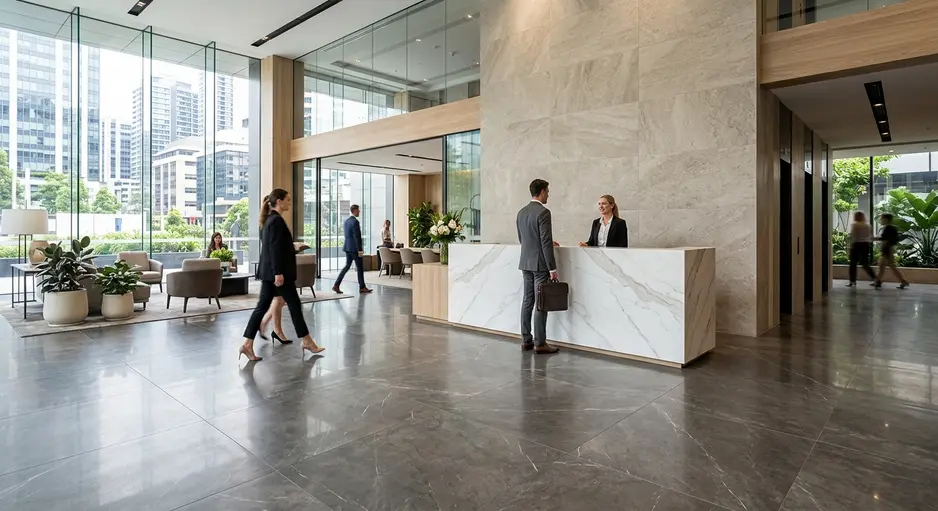
Explore the porcelain slab collections at IBIS Smart Marble and request samples, current technical information, availability, and application guidance before making a final selection.
The best porcelain slab is one that fits both the design vision and the real demands of the space. Polished finishes bring luxury to feature walls, while matte, satin, honed, and textured options serve different practical needs. Color should also respond to lighting, traffic, cleaning, and brand identity.
Compare full slabs, study product-specific test data, create a mock-up, and work with qualified fabricators and installers. This careful process will help deliver a commercial interior that looks refined, performs well, and remains easier to manage over time.
Matte, honed, and suitable textured finishes are often considered for busy floors. However, the exact product must be tested and approved for the planned traffic, moisture, cleaning routine, and local requirements.
Some may be suitable for approved applications, but a polished appearance does not confirm floor safety. Check floor-use documentation, entrance conditions, expected moisture, maintenance practices, and relevant building requirements.
Warm white, pale greige, soft beige, and light gray can create a more open appearance. Consistent flooring, restrained patterns, and balanced lighting will strengthen the effect.
Smooth matte, satin, and honed surfaces are often practical. Maintenance still depends on texture depth, color, pattern, joint design, traffic, spills, and the cleaning instructions supplied for the product.
Yes, when the slab, substrate, fixing system, and installation method suit the application. Exterior and overhead projects may require engineered mechanical fixing and a code-specific review.
Marble-look surfaces suit luxury, retail, and hospitality settings. Concrete looks support minimalist offices and industrial interiors. The best option depends on lighting, brand identity, furniture, and maintenance expectations.

Whatsapp Chatx
Hi! Click one of our representatives below to chat on WhatsApp or send us email to info@ibissmartmarble.com

|
Contact Us +91 95812 95812 |