
















13 November, 2026


India is a practical sourcing market for distributors, fabricators, retailers, and project buyers seeking marble-look porcelain surfaces. However, a successful order depends on more than choosing an attractive pattern or accepting the lowest factory quote.
Porcelain marble slabs are manufactured ceramic with marble-inspired designs. They are not quarried natural marble. This distinction affects product testing, HS classification, customs declarations, and import duties.
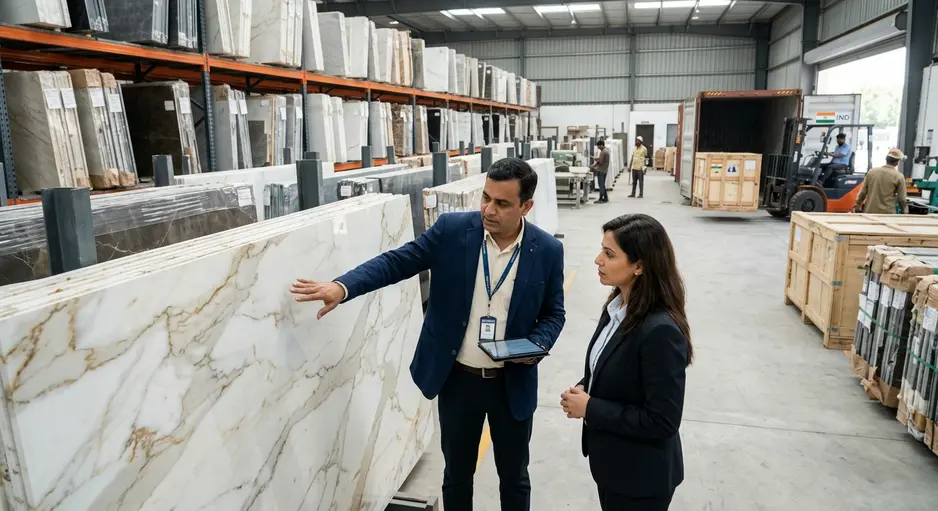
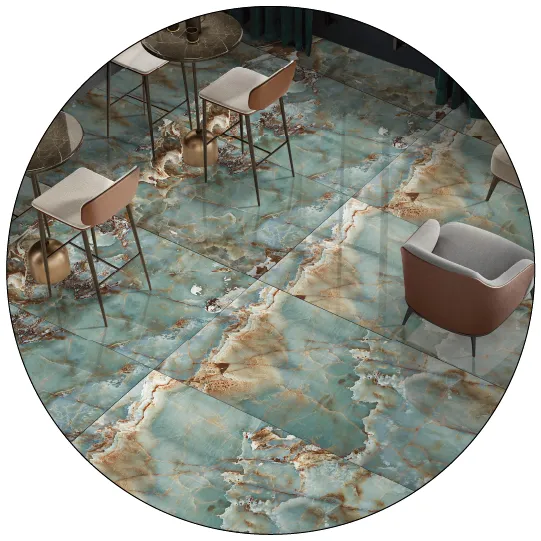
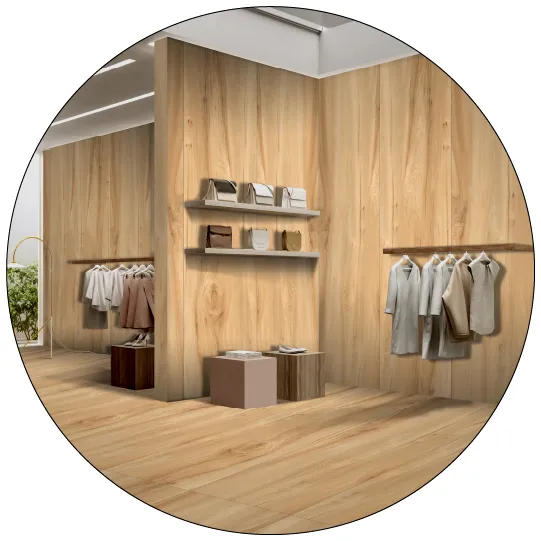
International buyers can source a broad range of marble-look patterns, slab sizes, thicknesses, and surface finishes from India. Available options may include polished, matte, and other finishes suited to walls, countertops, furniture, and selected flooring applications.
Volume buyers may also request private-label packaging, coordinated collections, or mixed designs. These options depend on the supplier’s production setup and minimum order policy.
A porcelain slab in India produces the material directly. An export-focused manufacturer also manages overseas documentation and packing. A merchant exporter buys from one or more factories, while a sourcing agent represents the buyer during selection and inspection.
A factory is not always the best option for every order. An experienced exporter may offer mixed designs, consolidated quantities, and more documentation. Always ask the business to disclose its role.
Your purchase order should state the nominal and actual dimensions, thickness, thickness tolerance, flatness, squareness, edge condition, and net weight per slab. Also confirm whether the slabs are rectified and how many pieces will be packed in each crate.
Do not rely on informal messages. Slab thickness and dimensional tolerances should appear in a signed specification that references an agreed testing standard.
the finish based on the final use. Polished surfaces can create a bright decorative appearance, but fingerprints or marks may be more visible. Matte finishes often provide a softer look. For floors, buyers should also review slip resistance and local safety requirements.
Ask whether the surface includes protective film or wax. Confirm how it must be removed before fabrication or installation.
Approve the base color, vein tone, number of design faces, code, and acceptable visual variation. If a project needs book-matched or continuous-vein layouts, confirm how the slabs are numbered and packed.
A small sample cannot show the full design movement. Request a representative slab or current production images when practical, then retain a signed golden sample.
Request current reports for absorption, breaking strength, flexural strength, stain resistance, and chemical resistance. Exterior or flooring projects may also need frost, abrasion, or slip testing.
Relevant references can include ISO 13006, EN 14411, ASTM C373, or ANSI A137.3. The required standard depends on the product, project, and destination market.
Start with small design samples, then request finish and thickness samples. For a large porcelain slab bulk purchase, review a full-size or representative slab when practical. Ask for photographs or video from the current batch before shipment.
A showroom piece may come from an older batch. A golden sample signed by both parties provides a clearer benchmark for shade, finish, and visual quality.
Be cautious when a quote is far below comparable offers, the seller refuses a live video, or the business and bank details do not match. Other warning signs include generic reports, no measurable tolerance sheet, full advance payment demands, and unclear breakage terms.
Porcelain marble slab price depends on dimensions, thickness, finish, design complexity, number of faces, order volume, quality grade, packaging, and private-label needs. Factory location, energy costs, the selected Incoterm, and the shipping destination also affect the quotation.
Ask every supplier to quote the same specification and trade term. Otherwise, a price comparison may be misleading.
The lowest factory quote may not produce the lowest landed cost. Weak crates, unclear destination fees, or poor quality controls can create extra costs after arrival. Customs duty may be assessed on CIF value or another valuation basis, depending on local rules.
State the exact place or port and refer to ICC Incoterms 2020. For payment, options can include a deposit with balance after inspection or a letter of credit for larger orders. Never send funds to an unrelated account.
Marble-look porcelain is generally classified as ceramic rather than natural stone. Many products fall within HS heading 6907, but the final national tariff line can depend on water absorption, dimensions, product characteristics, and destination-country rules.
Review the World Customs Organization HS nomenclature. The supplier’s suggested code should also be checked by a licensed customs broker. A written classification opinion can reduce the risk of delays or reassessment.
Indian export information can be checked through DGFT, ICEGATE, and CBIC.
Important: Tariffs and import rules change. Confirm current requirements with customs and a licensed broker before paying a deposit.
The inspection should verify quantity, design, shade, dimensions, thickness, finish, flatness, edge quality, and batch identification. Inspectors should also record chips, cracks, scratches, pinholes, crate labels, and packing quality.
Define the sampling plan, acceptance limits, and remedies before production begins. The final inspection should include the container condition and seal number.
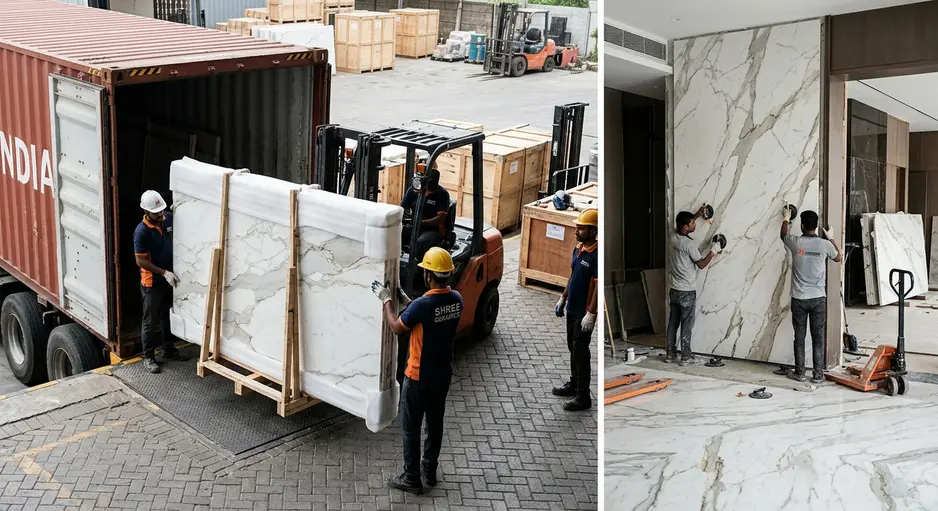
Large-format slabs need reinforced crates or A-frames. Protective separators, corner guards, moisture barriers, and anti-tip bracing help prevent movement and surface damage.
Wood packaging should comply with IPPC ISPM 15 where required. Crates should carry handling labels, weight details, and crate-packing information.
Loading should follow safe cargo principles in the IMO/ILO/UNECE CTU Code.
Container load capacity cannot be estimated by volume alone. It depends on slab size, thickness, density, crate weight, payload limits, loading arrangement, road restrictions, and carrier rules.
The supplier and international freight forwarding partner should approve the final plan. To reduce breakage, use suitable cargo insurance, limit empty crate space, document loading, and ensure the destination has proper unloading equipment.

Consider an illustrative distributor comparing three FOB offers. The cheapest option excludes protective film and uses lighter crates. A slightly higher quote includes stronger packaging, inspection, and clear tolerance controls. The higher factory price may provide a lower risk-adjusted cost by reducing damage and claims.
Import Porcelain Marble Slab from India
To import porcelain marble slabs from India with less risk, focus on written specifications, supplier verification, accurate landed-cost calculations, independent inspection, and safe container loading. Confirm tariff and product rules before ordering, then document every stage from sample approval to delivery.
International buyers comparing Indian porcelain slab suppliers can also contact Ibis Smart Marble. Evaluate its current range, documentation, packing, lead times, and commercial terms with the same checklist used for every potential supplier.
Prepare a detailed specification, verify the supplier, approve samples, compare landed costs, and confirm customs requirements. Before shipment, inspect the production batch, packaging, container loading, and documents. Use a customs broker and freight forwarder familiar with large ceramic panels.
Many porcelain tile and slab products fall under HS heading 6907. The exact code depends on water absorption, product details, and the importing country’s tariff schedule. Obtain confirmation from your customs broker rather than relying only on the supplier.
The minimum varies by design, thickness, finish, and supplier policy. Ask whether multiple colors or finishes can be consolidated into one shipment and whether mixed orders affect price or lead time.
There is no universal figure. Capacity depends on slab dimensions, thickness, density, crate design, payload limits, and local road rules. Request a crate-by-crate loading plan before booking freight.
Compare production capability, export experience, test reports, batch controls, inspection access, packaging, communication, and claims support. The lowest price should not outweigh consistent quality and safe delivery.

Whatsapp Chatx
Hi! Click one of our representatives below to chat on WhatsApp or send us email to info@ibissmartmarble.com

|
Contact Us +91 95812 95812 |