

















6 October, 2026



Modern interiors often use broad, uninterrupted surfaces to create a calm and spacious feel. The 1200×1800 porcelain slab for interiors offers this visual scale while remaining practical for many residential and commercial projects. Compared with smaller tiles, it can reduce the number of grout lines across walls and floors.
This format is available in marble, stone, concrete, and other contemporary designs. It can suit feature walls, bathrooms, selected floors, and approved countertop applications. However, the best results depend on careful product selection, layout planning, fabrication, and installation.
The nominal 1200×1800 porcelain slab size is 1,200 mm wide and 1,800 mm long. That equals 1.2 × 1.8 metres, or about 47.2 × 70.9 inches.
One full slab has a nominal area of 2.16 m², which is approximately 23.25 sq. ft. This is the gross coverage before cuts, joints, pattern matching, and waste are considered.
Always confirm the actual dimensions with the manufacturer or supplier. Thickness, production calibre, tolerances, and usable surface area may differ between product ranges.
Smaller tiles are easier to carry and may be simpler to fit in tight rooms. However, they create more grout lines. Large format porcelain slabs cover more area with fewer pieces, giving walls and open floors a cleaner visual flow.
The term 1200×1800 porcelain tiles is also used in the market. Yet “slab” better describes the scale, handling needs, and design impact of this format. Rectified slab edges support accurate alignment and controlled joints, but they do not remove the need for grout.
Yes. A product of this size is widely treated as a large-format surface material because its dimensions are much greater than those of conventional tiles. The exact product classification may depend on its thickness, intended use, and the standard applied.
Large slabs reduce the number of visible joints across a surface. This can make compact rooms feel less busy and help large rooms look more unified. The result is a near-continuous or seamless visual appearance rather than a truly joint-free finish.
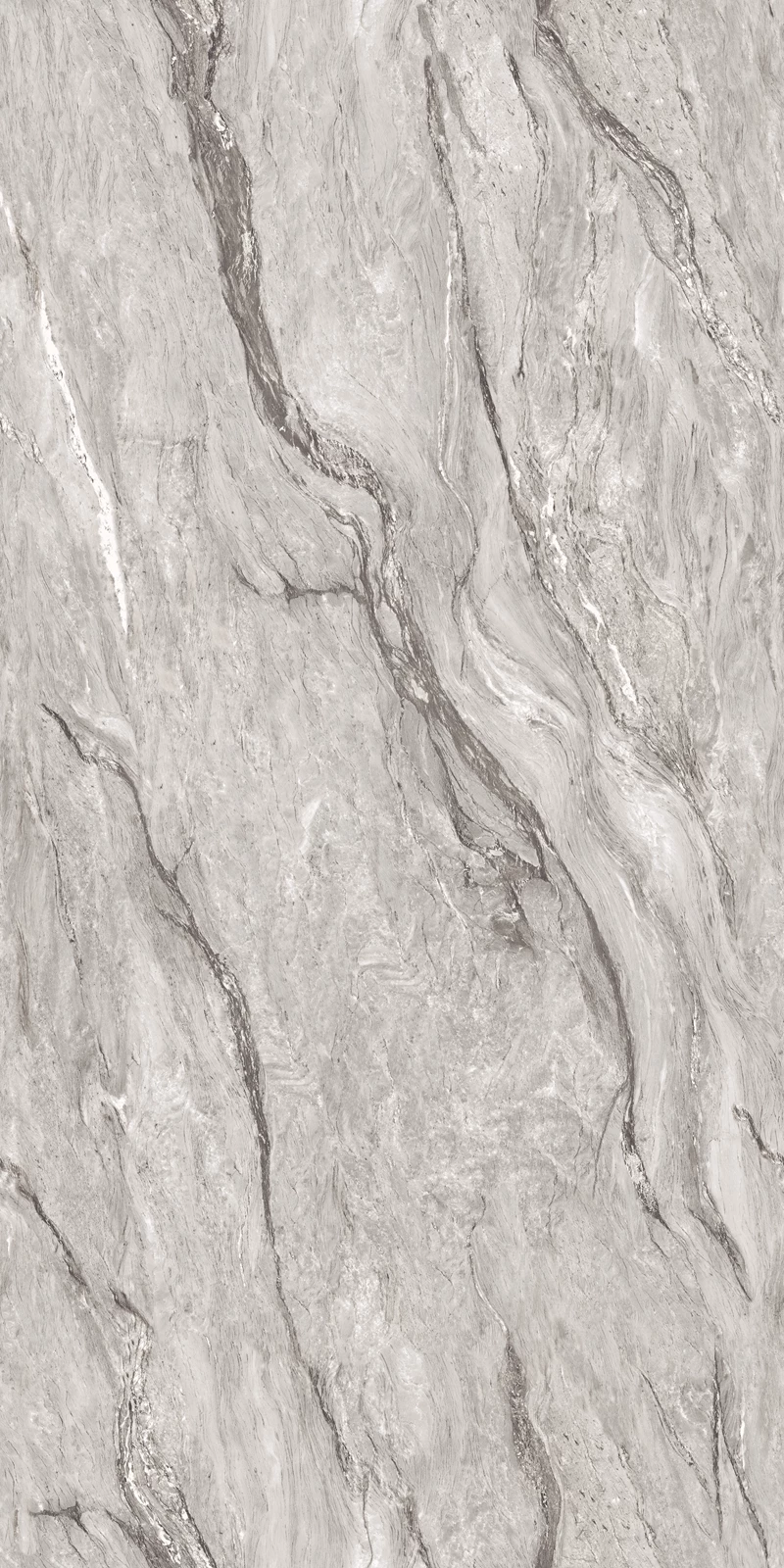
The format also gives veined designs more space to develop. Marble and stone effects can look more natural when the pattern is not divided into many small sections.
Porcelain is generally known for low water absorption. Depending on the tested product, it may also provide a stain resistant material, a scratch resistant surface, and resistance to heat and common household chemicals.
These qualities can make porcelain easier to care for than some natural materials. Still, performance varies by product. A technical data sheet should confirm water absorption, breaking strength, chemical resistance, wear performance, and approved applications.
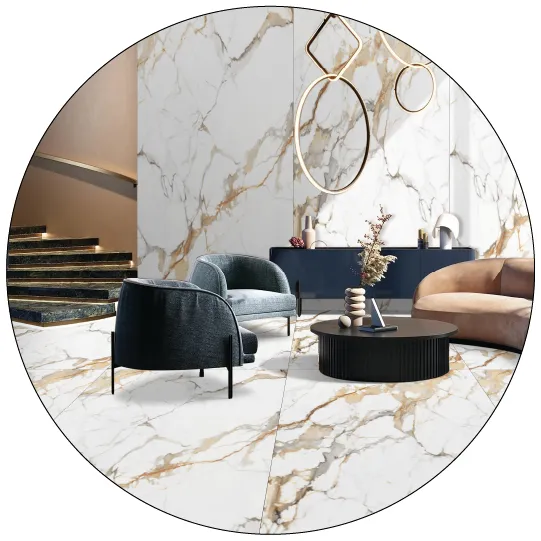
Marble look porcelain slabs and stone look porcelain slabs offer the appearance of natural surfaces with more control over colour and pattern. They can also make it easier to repeat a selected design across several rooms.
Porcelain does not copy every structural or visual feature of natural stone. It is not indestructible, either. Sharp impacts, poor support, or incorrect fabrication can damage an edge or cut-out.
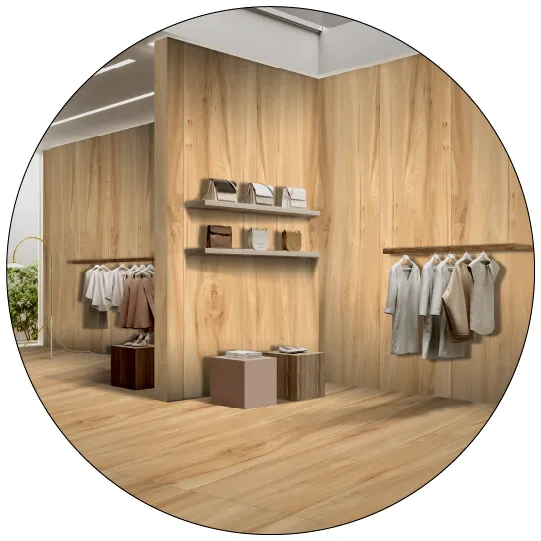
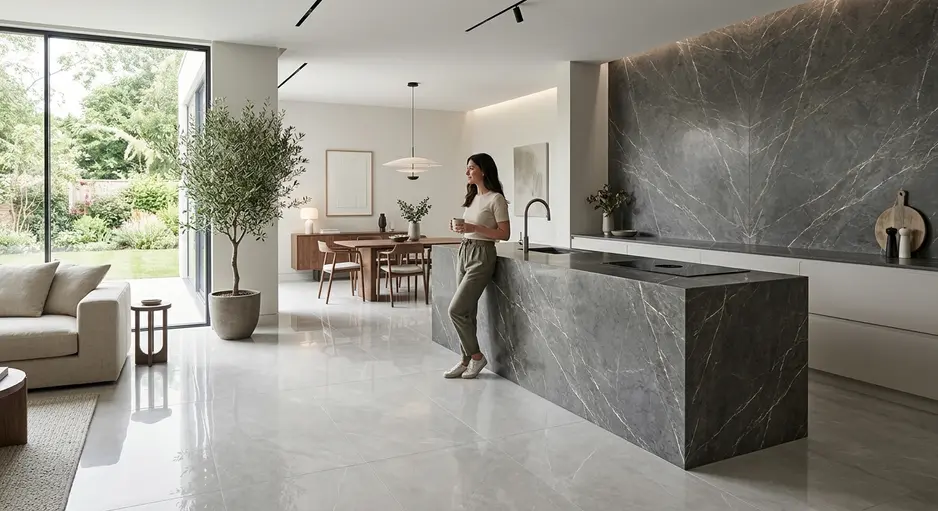
Large porcelain slabs for walls can create a striking surface in living rooms, reception areas, lift lobbies, corridors, and retail displays. They are also well suited to TV units and feature walls because fewer joints interrupt the design.
For veined surfaces, the installer should plan the slab sequence before cutting. A bookmatch slab design can create a mirrored pattern, while vein continuation can help adjacent pieces appear connected. Fireplace use should be confirmed against the product rating and installation system.
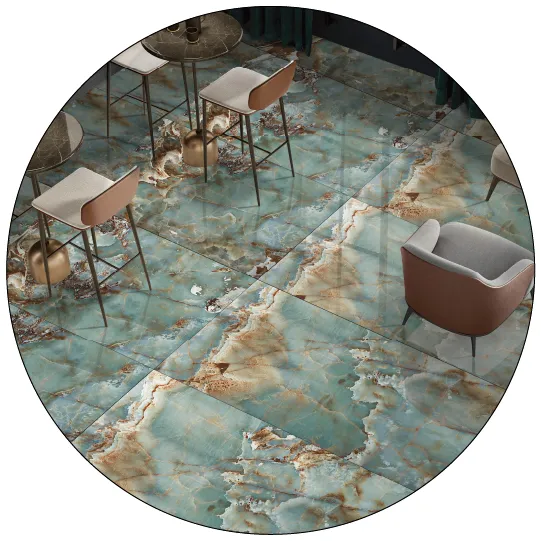
Porcelain slabs for flooring can work in homes, offices, hotels, and showrooms when the selected product is floor-rated. Important factors include breaking strength, wear resistance, slip performance, substrate flatness, adhesive coverage, and movement accommodation.
A matt porcelain finish is often considered for busy or wet areas because it has a softer appearance and may offer suitable grip. However, finish names alone do not prove slip resistance. Check the tested rating for the intended setting.
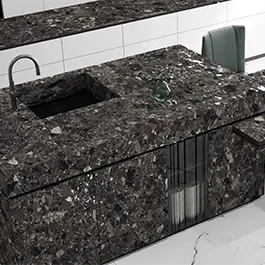
Some porcelain slabs for kitchen countertops can be used on islands, worktops, backsplashes, and waterfall ends. Suitability depends on thickness, support, fabrication limits, edge design, and manufacturer approval.
Countertop applications need careful planning around sinks, taps, cooktops, and corners. Cut-outs should be made by a qualified fabricator using suitable equipment. A slab approved only for wall cladding applications should not be assumed to be safe for a worktop.
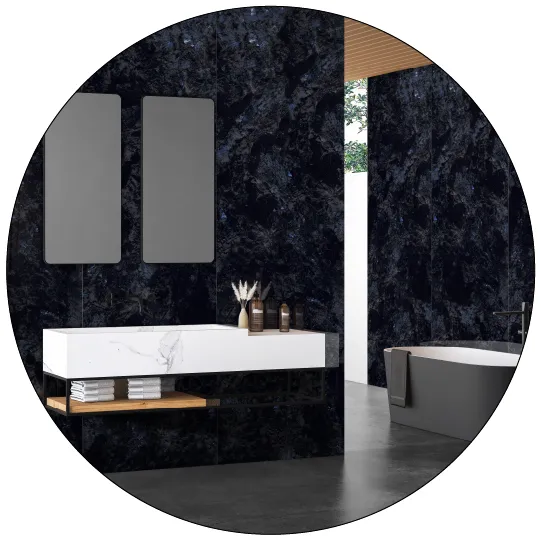
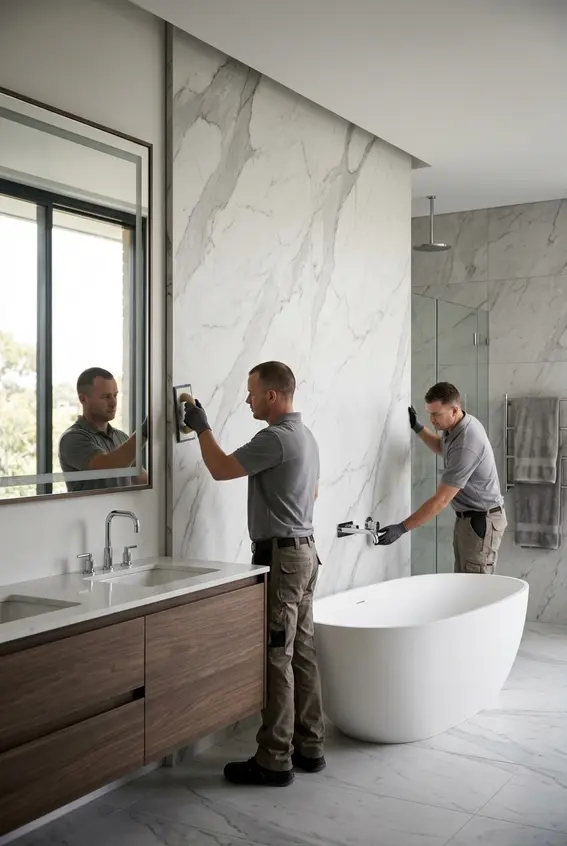
Porcelain slabs for bathroom interiors can cover shower walls, vanity areas, and feature surfaces with fewer grout lines. Selected floor-rated products may also be used on bathroom floors.
The slab itself does not replace waterproofing. Shower and wet-area installations require a suitable waterproof system beneath the finished surface, along with correct sealing around penetrations and transitions.
Porcelain slabs for commercial interiors can help coordinate walls, floors, counters, and display areas. Hotels, restaurants, offices, and retail spaces may benefit from their broad visual scale and straightforward routine cleaning.
For example, a hotel reception could use matt stone effects for a low-glare backdrop. A retail showroom could use large slabs to reduce visual breaks, while a modern apartment might pair a marble-look wall with a coordinated dining floor. These are illustrative design scenarios, not project claims.
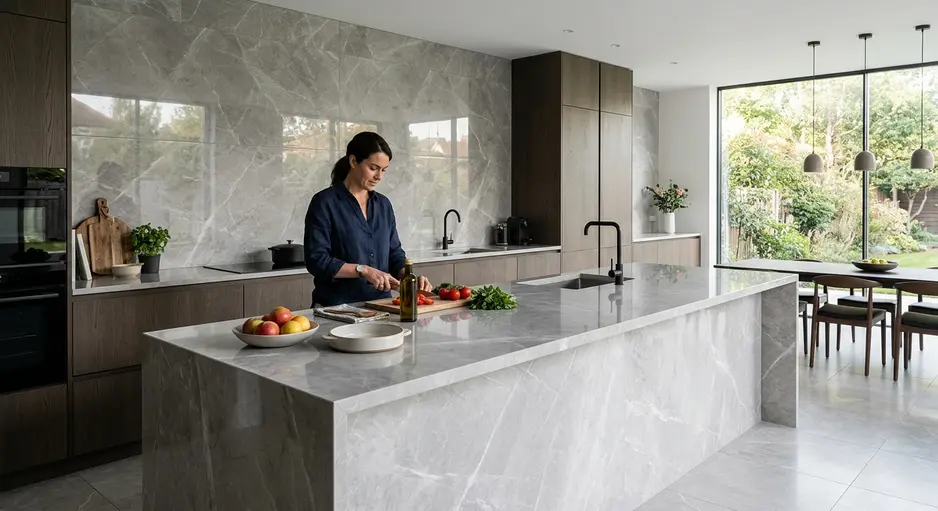
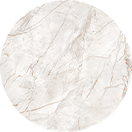
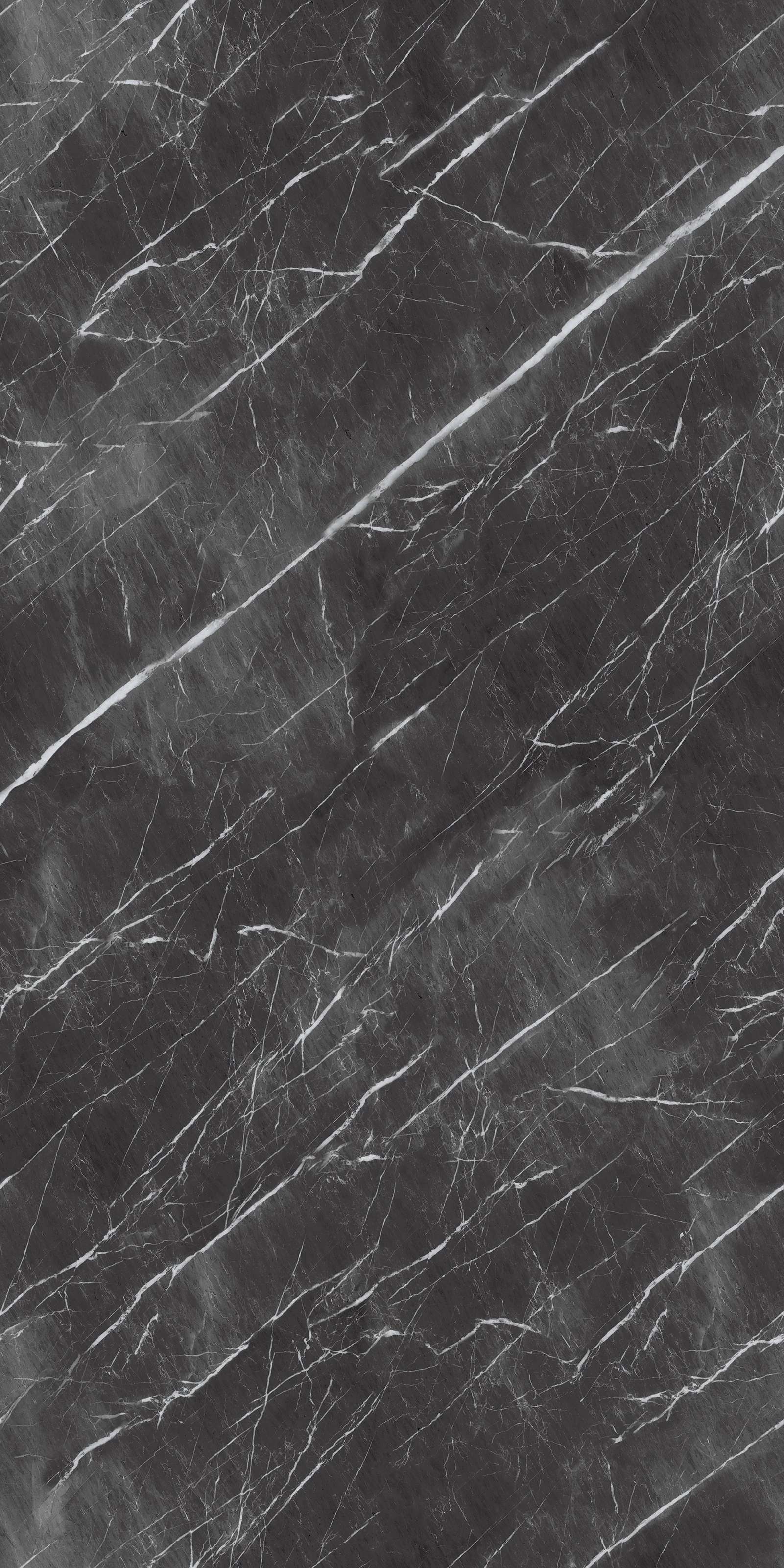
White marble effects can brighten a room, while grey veins add movement without making the scheme feel too heavy. Dark marble patterns can form a strong focal point in lounges, reception areas, and hospitality interiors.
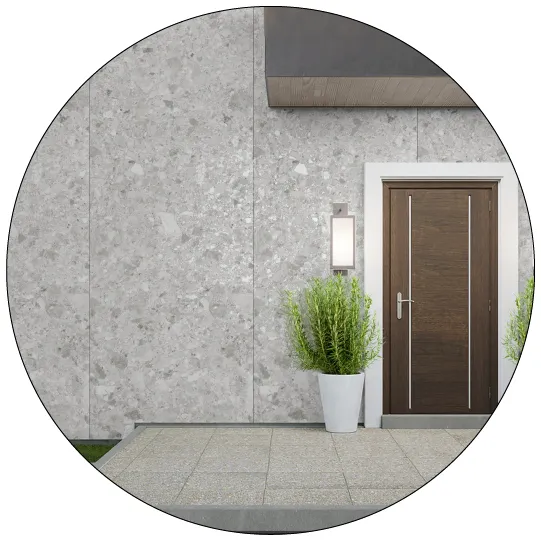
Travertine, limestone, and concrete effects suit calm, contemporary interior design. Neutral surfaces work well with timber, metal, and soft fabrics. Always review full-slab faces because a small sample cannot show the complete pattern or level of variation.
A polished porcelain finish reflects more light and can create a luxurious look. It is often considered for feature walls and other low-risk interior areas. Glare, fingerprints, cleaning needs, and product-specific slip performance should be reviewed.
A matt surface has a softer, more understated appearance. It is popular for modern homes, bathrooms, and commercial spaces. Texture and cleaning methods vary, so the technical and care guidance still matters.
Satin offers a balanced sheen between polished and matt. It may suit walls and selected floors where approved. Availability and application ratings should be checked with the supplier.
Digital previews are useful for early selection, but screen images may not show exact colour, gloss, texture, or pattern variation. Review physical samples and full-slab images before confirming an order.
Start with intended use rather than appearance alone. Ask for technical information and check the following points:
Product information may refer to ISO 13006 for ceramic tile classification and performance. ANSI A137.3 may apply to certain gauged porcelain tile and panel products. Applicability depends on product classification and the destination market.
Create a scaled floor plan or wall elevation. Mark joints, corners, doors, sockets, niches, plumbing points, and cut-outs. Decide where full pieces should be placed and where narrow cuts can be avoided.
If the design uses bookmatching or connected veins, approve the slab faces and sequence before fabrication. This step is especially important when the pattern changes from one slab to the next.
There is no universal waste allowance for every project. Room shape, pattern direction, openings, corners, and fabrication details can change the final quantity. Ask the installer or fabricator to prepare a cutting plan before ordering.
The substrate must be structurally sound, clean, stable, and sufficiently flat. Large slabs cannot hide an uneven wall or floor. Surface variation can lead to poor adhesive contact, alignment problems, and stress within the installation.
Wet areas also require an approved waterproofing system. Follow local building requirements and the instructions provided by the slab, adhesive, grout, and waterproofing manufacturers.
Trained installers may use lifting frames, suction cups, support tables, rails, and suitable cutting tools. These help keep the slab supported during movement and fabrication.
An adhesive made for the selected large-format product and substrate should be used. Back-buttering and careful adhesive placement may help achieve the required contact. The exact method must follow project specifications and system-manufacturer guidance.
Rectified edges do not justify zero-joint installation. Grout joints are still needed, while movement joints help accommodate changes within the building and finished surface. Corners, transitions, trims, and mitred edges should be resolved before installation begins.
Installers should consult applicable local standards and relevant guidance from recognized sources such as the Tile Council of North America, MAPEI, LATICRETE, or Schluter when those systems apply.
Correctly specified and installed porcelain is durable in service. The risk of damage is greater during transport, unsupported handling, cutting, or installation over an unsuitable base.
Proper equipment, full support, suitable adhesive contact, planned movement joints, and trained labour reduce this risk. Electrical points, plumbing penetrations, and niches should be finalized before cutting to avoid costly last-minute changes.
When comparing a 1200×1800 porcelain slab manufacturer, review quality control, batch consistency, technical documents, packaging, pattern variation, traceability, and after-sales support.
Importers assessing a 1200×1800 porcelain slab exporter should also ask about minimum order quantities, lead times, export packing, container loading, inspection, Incoterms, claims procedures, and destination documents. A dependable 1200×1800 slab supplier should provide clear answers before an order is placed.
Readers can explore the 1200×1800 porcelain slab collection from Ibis Smart Marble and request product details, full-slab images, technical specifications, pricing, or export assistance based on project needs.
1200×1800 Porcelain Slabs for Modern Interior
1200×1800 porcelain slabs for modern interiors combine broad visual coverage with flexible design choices. They can bring fewer visible joints to walls, approved floors, bathrooms, commercial spaces, and selected countertop projects.
Success depends on more than choosing an attractive pattern. Confirm the technical rating, review complete slab faces, plan every cut, and use qualified fabricators and installers. Explore porcelain slabs for interior projects at Ibis Smart Marble to request catalogues, product information, full-slab images, pricing, or support for your next residential or commercial project.
One nominal slab covers 2.16 m², or approximately 23.25 sq. ft., before cutting, joints, and waste.
Yes, if the product is rated for flooring and meets the project’s strength, wear, and slip-resistance needs.
It may be possible in some projects, but the existing surface must be stable, well bonded, clean, and flat. The complete installation system should be approved for this use.
No installation should be treated as joint-free. Rectified edges allow precise alignment, but grout and movement joints remain necessary.
Use a soft cloth or mop with a pH-appropriate cleaner recommended for the surface. Avoid abrasive tools and cleaning products that leave a film.

Whatsapp Chatx
Hi! Click one of our representatives below to chat on WhatsApp or send us email to info@ibissmartmarble.com

|
Contact Us +91 95812 95812 |