












7 October, 2026


Flat walls are giving way to surfaces with depth, movement, and character. A carving porcelain slab is a large-format surface with engraved, ribbed, or sculpted details. Its raised and recessed areas react to light, turning a plain wall into an architectural feature.
This guide explores the top 10 carving porcelain slabs for modern interiors, from clean fluted patterns to custom artistic designs. You will also learn where each style works best, how to choose the right relief depth, and what to consider before installation.
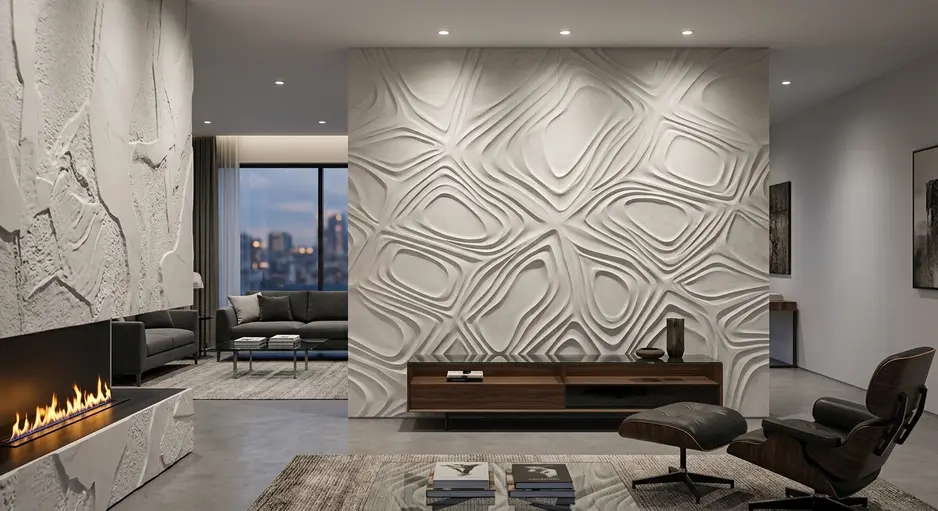
Carved surfaces may be pressed, engraved, sculpted, or produced with coordinated decorative methods. Unlike a printed pattern that only appears dimensional, a true tactile design has raised and recessed areas that you can feel.
These details create natural light and shadow effects. Side lighting makes the relief more visible, while direct frontal lighting gives it a softer look. The final result can range from subtle movement to a bold interior focal point.
Standard slabs have smooth or lightly textured finishes. They are often easier to wipe clean and install. Carved porcelain slabs have more surface depth, stronger visual impact, and greater lighting potential.
Deeper grooves may hold more dust or residue, so they need extra cleaning. They may also require more detailed edge, joint, and corner planning. For this reason, they often sit above basic flat slabs in terms of fabrication and installation cost.
This list focuses on practical design value rather than unsupported product rankings. Each option works with contemporary interiors and can coordinate with materials such as wood, glass, metal, and stone.
We also considered visual depth, maintenance, lighting response, and use in residential and commercial settings. Before making a final choice, review a physical sample under project lighting. Confirm dimensions, applications, installation instructions, and performance data with the supplier and an experienced slab installer.
Linear fluting uses repeated vertical grooves to make walls feel taller and more ordered. It is one of the most versatile modern porcelain slab wall designs for TV units, corridors, headboards, and reception areas.
Warm white, beige, soft grey, and charcoal work especially well. Add light from above or one side to define the grooves. Medium-depth fluting is often easier to maintain than a deeply ribbed finish.
Wave patterns bring soft movement to a room. Their flowing three-dimensional surface suits luxury living rooms, hotel lobbies, wellness areas, and spa-style bathrooms.
Grazing light helps each curve stand out. Keep furniture and accessories simple so the wall remains the main feature. Pale neutral shades create a calm effect, while darker tones produce more dramatic shadows.
Geometric 3D porcelain slabs may feature arches, diamonds, facets, hexagons, or abstract lines. They give minimalist spaces a clear architectural identity without the need for several decorative materials.
These carved slab designs work well in offices, retail stores, dining rooms, and modern apartments. Pair them with clean furniture and restrained colors. Even lighting is important where several panels must form one continuous pattern.
Chiselled designs recreate the rugged character of hand-worked limestone or split stone. They introduce natural depth while offering the visual continuity associated with large porcelain panels.
Use stone-inspired textures on entrance walls, lounges, or hospitality features. They may also suit fireplace surrounds when the chosen product, adhesive, substrate, and installation method are approved for that application. Deep surfaces are best kept away from areas exposed to grease.
Ribbed travertine-look designs combine linear carving with warm, stone-like movement. They fit quiet luxury interiors where texture matters more than bold color.
Cream, sand, and light taupe tones coordinate well with oak, bronze, soft upholstery, and microcement. These luxury porcelain slabs can create refined vanity walls, living room features, and reception backdrops. Pattern alignment should be planned before cutting begins.
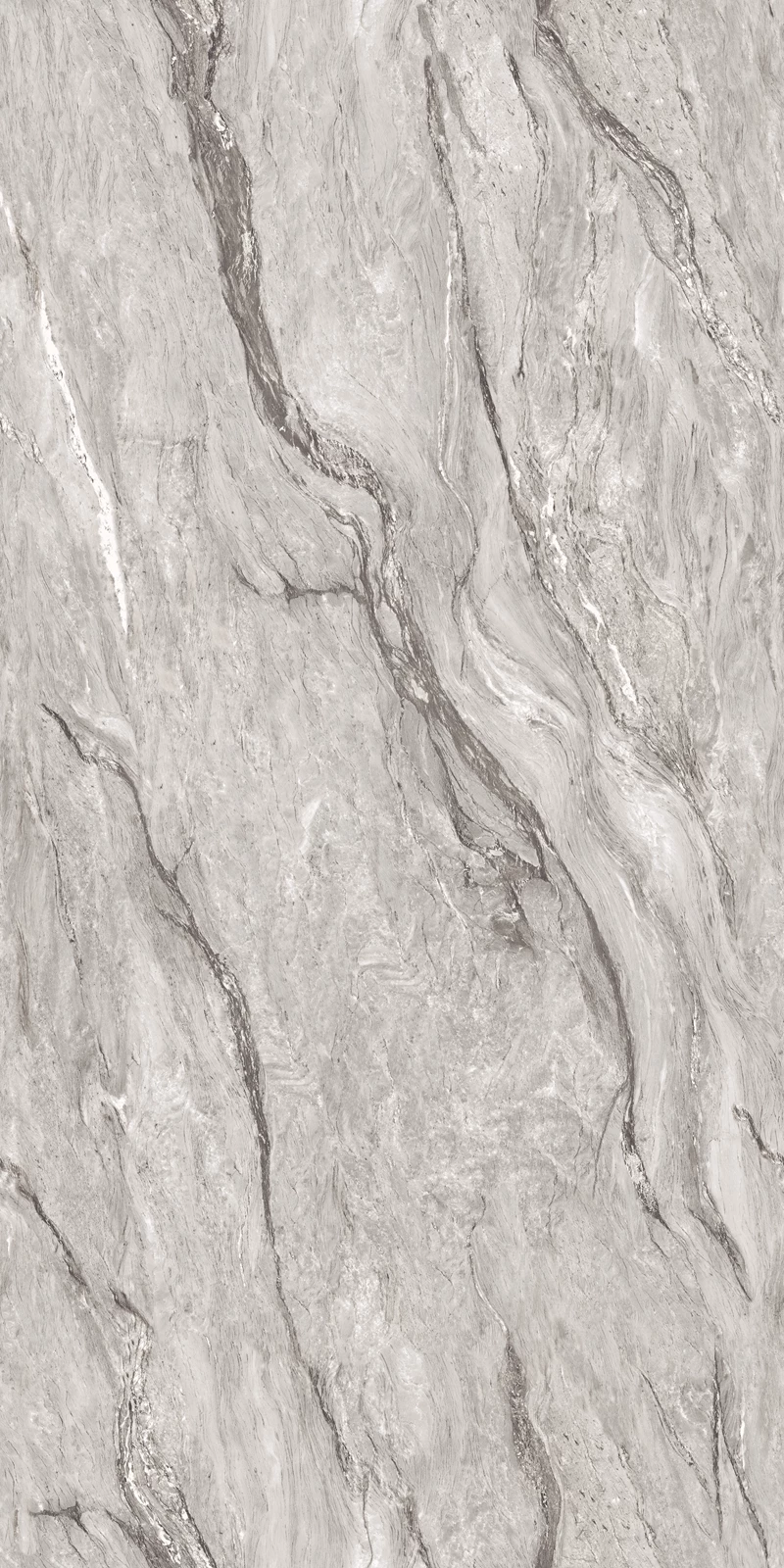
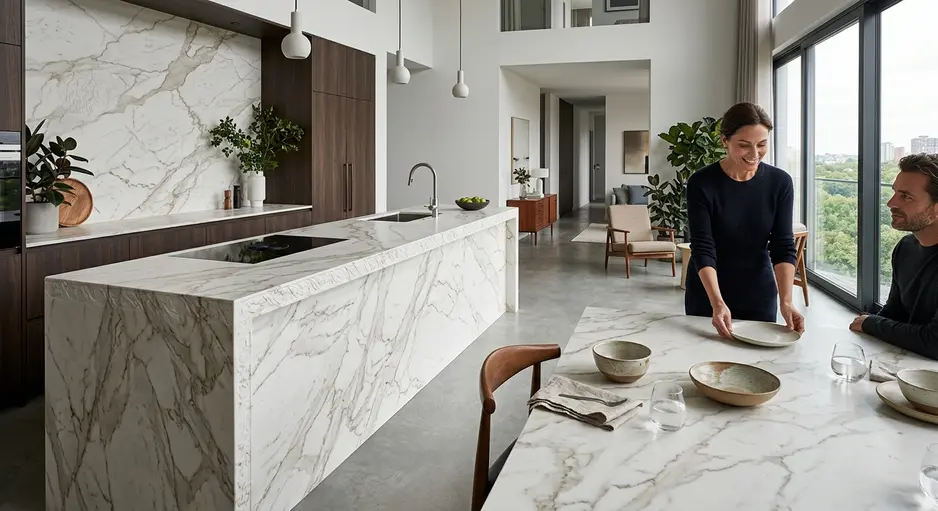
This style combines marble-inspired veining with a sculpted finish. It offers a more tactile alternative to a traditional polished marble-look wall and works well in boutiques, formal reception areas, and luxury wall cladding.
Veins should flow naturally across adjoining panels. Ask for an elevation plan or dry layout before installation. Soft wall-washing light usually reveals both the pattern and the relief without creating harsh glare.
Wood-inspired textures bring warmth through ribbed lines or grain-like details. They suit biophilic spaces, warm minimalist homes, restaurants, and hotel interiors.
Unlike timber panels, an approved porcelain product may be suitable for certain humid areas. However, wet-area use still depends on the product specification, waterproofing system, joints, and installation method. Pair this finish with stone-look floors and warm lighting for a balanced result.
Leaves, petals, branches, and abstract natural forms turn decorative porcelain slabs into wall art. They create soothing statement surfaces in bedrooms, dining areas, wellness spaces, and private lounges.
Organic patterns are most effective on one accent wall. Using them across every surface may make a room feel crowded. Subtle tonal colors help the sculpted finish remain elegant rather than overly decorative.
Fabric-inspired relief adds softness, while concrete-look designs support a more industrial mood. Both options suit offices, loft-style homes, retail interiors, and modern commercial areas.
Fine texture is useful where easier routine cleaning is a priority. Combine it with black metal, natural wood, or clear glass. Gentle side lighting will reveal the surface without making a compact room feel too busy.
Custom slabs may include abstract artwork, bespoke motifs, signage, or branded patterns. They are well suited to luxury homes and carved porcelain slabs for commercial spaces where a distinctive identity is important.
Customization requires clear production drawings, approved samples, edge plans, and careful slab-to-slab continuity. It may also involve longer lead times. Confirm the design scale and relief depth with a full mock-up before approving production.
Fluted, wave, travertine-look, and carved marble designs work well behind a television, sofa, or display console. A textured porcelain slab for a living room should complement the room rather than compete with every other finish.
Keep nearby walls simple. Behind a TV, choose a controlled pattern that will not distract from the screen. Fine vertical grooves and neutral colors are often a practical choice.
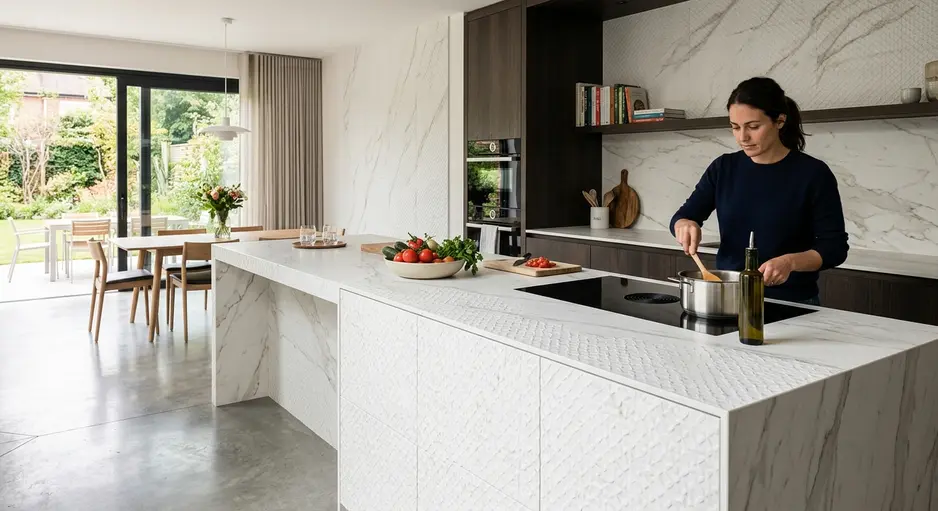
Moderate relief is easier to clean in splash-prone areas than deep carving. Confirm that the slab and installation system are approved for wet conditions. Waterproofing, joints, sealant, cleaning access, and substrate preparation all need careful planning.
Slip resistance is also essential when porcelain is used on a horizontal surface. A wall product should not be assumed suitable for flooring.
Wood-inspired surfaces, soft waves, and organic patterns create a relaxed atmosphere. Use warm, diffused lighting to avoid severe shadows. In a bedroom, a low- to medium-relief wall behind the bed can add depth without becoming visually heavy.
Geometric, stone-inspired, and branded patterns suit hotel lobbies, restaurants, offices, shops, and reception desks. For high-traffic projects, consider impact exposure, stain resistance, cleaning needs, and future replacement material.
A deep pattern can dominate a small room. Fine vertical details and light colors may make the same space feel taller and more open.
Inspect samples in daylight and under the planned artificial light. Test illumination from the side, above, and below. Side lighting or wall grazing usually reveals sculpted details better than flat frontal light.
Lighting can also expose surface or installation flaws. Review the sample from typical viewing distances, not only at close range.
Plan outlets, switches, corners, joints, and wall fixtures before ordering. Ask Ibis Smart Marble for available samples and relevant technical details when comparing porcelain slab designs for interiors.
Large panels need trained handling, cutting equipment, and a stable, clean, sufficiently flat substrate. Installers must use a suitable fixing system and achieve the adhesive coverage required by the product and project conditions.
Installation should follow the manufacturer’s instructions, local building requirements, and applicable guidance. ANSI A137.3 addresses gauged porcelain tile and panel products, while ISO 10545 covers ceramic tile test methods. The TCNA Handbook provides recognized installation guidance for North American projects.
Large slabs reduce grout lines, but they do not create a completely joint-free wall. Movement joints and changes of plane still require proper treatment.
Map veins, flutes, and geometric patterns before cutting. Plan external corners, exposed edges, fixtures, and transitions at the same time. Order enough extra material for cuts and possible future repairs.
Fine and moderate relief is generally easier to clean than deep carving. Remove dust with a microfiber cloth or soft brush. In kitchens and bathrooms, clean residue before it hardens inside grooves.
Avoid abrasive tools and unapproved chemicals. Follow the slab manufacturer’s care instructions and test any new cleaner in a hidden area first.
Buy Carving Porcelain slab for Interiors
A well-chosen carving porcelain slab combines tactile design with architectural depth. The best option is not always the deepest or most complex pattern. It is the one that suits the room scale, lighting, cleaning needs, and installation conditions.
Compare physical samples, review technical specifications, and involve an experienced installer early. To begin planning a residential or commercial feature, explore the available porcelain slab designs from Ibis Smart Marble and request guidance based on your project needs.
Yes. Carved porcelain slabs for feature walls can add depth to TV areas, entrances, bedrooms, living rooms, and reception spaces. The pattern should suit the wall size, room scale, lighting, and viewing distance.
They may be used when the product and fixing system are approved for wet areas. Waterproofing, joints, substrate preparation, exposure, and cleaning access must be considered. Moderate relief is often more practical in splash zones.
Not always. Deep or complex patterns may feel busy, but light colors and fine vertical relief can make a wall appear taller. Use the texture on one surface and keep nearby finishes simple.
Side lighting, wall grazing, and well-positioned linear LEDs reveal surface depth. Frontal lighting gives a flatter effect. Test the angle first, as very harsh light can exaggerate shadows and substrate imperfections.
They can be. Cost varies with panel size, carving complexity, finish, customization, transport, fabrication, and installation. Detailed corners and complex pattern matching may add to the total project cost.

Whatsapp Chatx
Hi! Click one of our representatives below to chat on WhatsApp or send us email to info@ibissmartmarble.com

|
Contact Us +91 95812 95812 |