





















7 October, 2026



UK buyers increasingly want the elegance of marble without the care often linked to natural stone. Large-format porcelain offers a practical answer. It recreates rich colours and veined surfaces while supporting easier cleaning and consistent design across larger projects.
Choosing a porcelain slab marble manufacturer involves more than comparing patterns. Buyers should review technical performance, slab consistency, intended uses, export packing and project support. This guide explains what to check when considering Ibis Smart Marble or another manufacturer supplying porcelain slabs to the UK.

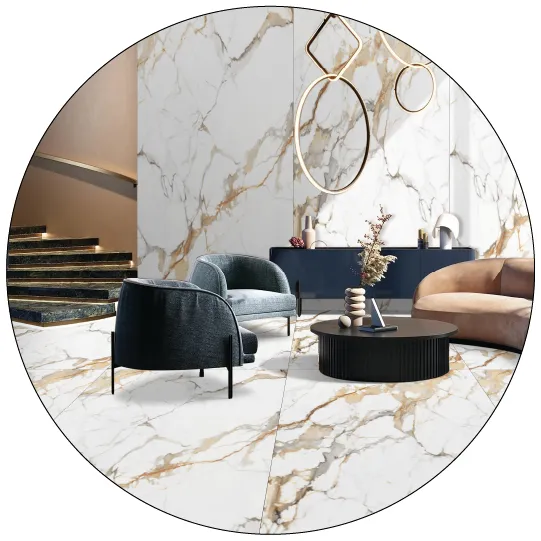
A porcelain marble slab is a large porcelain stoneware surface made to reproduce the colour, veining and visual depth of quarried marble. Depending on its technical rating and thickness, it may be used for walls, floors, kitchen countertops, bathroom cladding and decorative surfaces.
Modern production methods combine controlled raw materials, firing, surface finishing and high-definition printing. These processes create a detailed marble-effect finish with fine veins, tonal changes and a convincing natural stone appearance.
Collections may include several faces rather than one repeated pattern. Some also offer coordinated or bookmatch designs. These allow installers to place two slabs together to form a mirrored feature or flowing vein arrangement.
No. Porcelain is manufactured, while natural marble is quarried stone. Marble has unique geological variation and can often be refinished. Porcelain generally offers more predictable patterns, low water absorption and fewer routine sealing needs. Performance still varies by product and finish, so buyers should check the relevant data sheet.
Porcelain marble slabs provide the visual impact of stone without many of marble’s day-to-day care demands. Most vitrified porcelain surfaces do not need the same routine sealing as natural marble. They are also less vulnerable to common acidic spills, although cleaning instructions should always be followed.
Manufactured designs can improve visual consistency across apartments, hotel rooms or retail sites. This can make specification easier when a project needs the same look in several areas or during separate build phases.
Low water absorption makes suitable porcelain products useful in kitchens, bathrooms and other moisture-prone interiors. A properly specified slab can also provide high durability and good resistance to stains and household chemicals. No surface should be described as completely scratch-proof, stain-proof or unbreakable without supporting test evidence.
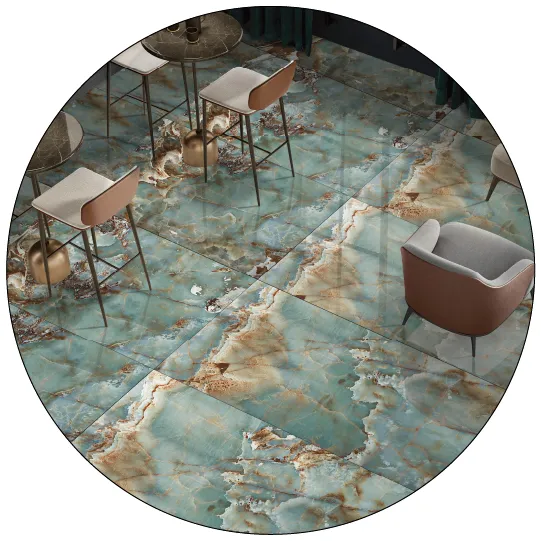
A polished finish reflects light and can add depth to reception walls, lift surrounds and luxury interiors. A matt finish creates a softer look and may be preferred for floors. Slip safety must be based on certified test results and the project’s risk assessment, not appearance alone.
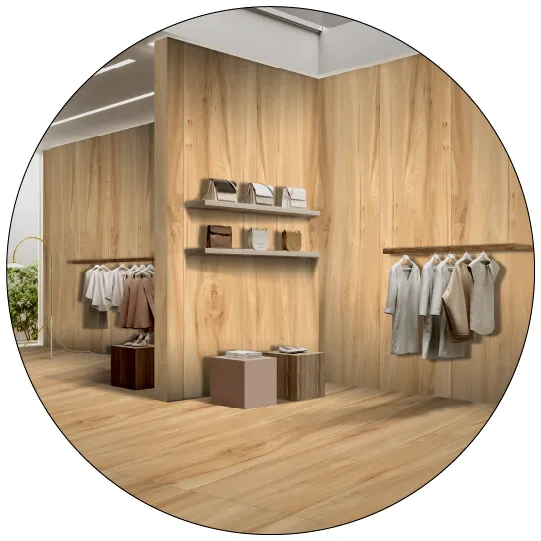
Approved slabs can be used for feature walls, living spaces, reception areas, corridors, lift surrounds and retail interiors. Their large dimensions create broad visual fields with fewer joints. For flooring solutions, buyers must confirm abrasion performance, slip resistance and installation requirements.
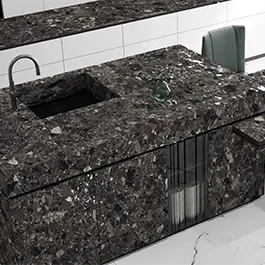
A large format porcelain slab can create a clean worktop or splashback with fewer visible grout lines. Porcelain can offer useful resistance to moisture, heat and everyday stains, but suitability depends on the chosen product.
Sink openings, hob cut-outs and edge details create stress points. Fabrication should therefore be completed by a specialist with the correct cutting equipment. Thickness, support and minimum distances around cut-outs must follow the manufacturer’s guidance.
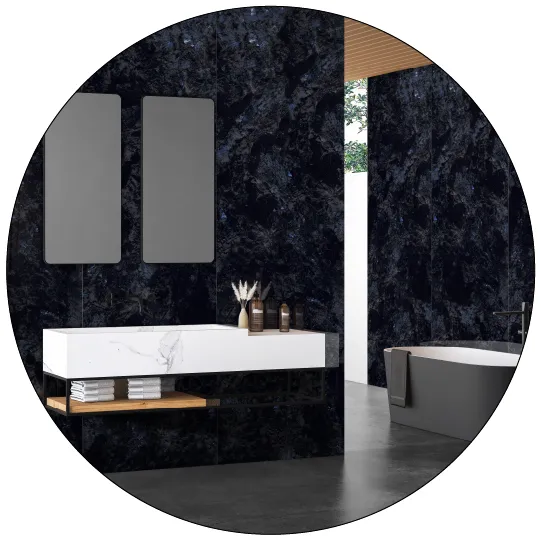
Porcelain marble slabs for interiors can cover shower walls, vanity areas and bathroom feature surfaces. Fewer joints can make cleaning simpler, but the slab itself does not replace tanking or waterproofing. The substrate, adhesive system, joints and sealing details remain important.

A reliable marble-effect porcelain slab manufacturer should explain how quality is checked throughout production. Ask about raw-material control, firing, calibration, flatness, edge quality and dimensional tolerances.
Buyers should also review shade control, visual inspection, batch identification and packing checks. Traceable batches are especially helpful when material is being supplied for phased commercial work.
Do not assess a collection from a small digital sample alone. Request full-slab photographs, physical samples and details of the available faces. If the design will cover a wide wall, confirm how often the same face repeats.
For bookmatch designs, ask for the intended slab sequence. Buyers should also confirm whether polished, matt or other finishes are available and whether replacement material can be matched to the original batch.
Request nominal and actual slab dimensions, thickness, weight and tolerances. A thin panel that works well as interior wall cladding may not be suitable for a floor or unsupported worktop. The application, substrate and fixing system must be considered together.
A dependable porcelain slab marble exporter in UK supply chains should provide clear technical and commercial documents. These may include product data sheets, test reports, packing lists, crate references and loading records. Buyers should also ask about samples, lead times, claims procedures and communication with fabricators.
Product selection should be based on evidence, not general marketing claims. Depending on the intended use, buyers may need to review:
Ask the supplier which BS EN 14411 classification and ISO 10545 test methods apply to the product. Current declarations, conformity documents and market requirements should also be confirmed for the specific route to the UK.
Large slabs need a stable, level substrate and a compatible fixing system. Installation planning should cover adhesive contact, movement joints, lifting frames, edge protection and safe handling. Requirements should be agreed before material reaches the site.
They are more demanding than conventional tiles. Their size reduces joints but increases the need for careful handling, accurate cutting and good substrate preparation. Use installers and fabricators with proven experience in large-format porcelain slab work.
Allow extra material for cuts, pattern alignment and possible site damage. Keep slabs from the same batch for continuous areas. Bookmatched panels should be packed and installed in the correct order. Where practical, retain spare material for later repairs.
A porcelain slab exporter UK buyers appoint should explain the packing method before dispatch. Large panels may require reinforced crates or suitable frames, along with edge and corner protection. Crates should be clearly identified and loaded for safe unloading.
Inspect the shipment on arrival. Record visible crate or slab damage before moving the material, and follow the agreed notification process.

Ibis Smart Marble can be included when comparing a porcelain marble slabs supplier for UK projects. Buyers should assess its available collections against the required appearance, finish, dimensions, application and technical performance.
Before placing an order, request the latest product information directly from the company. This should confirm current slab specifications, bookmatch availability, testing, packing, batch availability and export support. Verifying these details prevents assumptions about manufacturing location, delivery time or product approval.
Share your required size, finish, application, quantity and UK delivery location with Ibis Smart Marble. Its team can identify relevant options, confirm available documentation and prepare a project quotation.
Top Porcelain Slab Marble Exporter in UK
Selecting a porcelain slab marble manufacturer requires a balance of design, verified performance and dependable export support. Review full slabs, confirm approved uses and involve the installer before ordering. With careful specification and handling, porcelain marble slabs can deliver an elegant, low-maintenance surface for UK homes, hotels, retail spaces and commercial interiors.
Neither material is best for every project. Porcelain usually needs less routine maintenance and offers more consistent patterns. Natural marble provides unique geological variation and can often be refinished. The right choice depends on design, use, budget and maintenance expectations.
Yes, when the selected slab is approved for worktop use. Confirm its thickness, support requirements, edge design and cut-out limits. An experienced fabricator should complete all sink, tap and hob openings using suitable tools.
Some slabs are approved for both applications, but not all. Suitability depends on format, thickness, finish, technical rating, substrate and fixing system. Review the product data sheet before specifying marble porcelain slabs for walls and floors.
There is no universal best thickness. Thin panels may suit wall cladding, while flooring and countertops can require different support or specifications. Follow the manufacturer’s guidance and consider slab weight, substrate condition and expected loads.
Most vitrified porcelain surfaces do not need the routine sealing associated with natural marble. Requirements can vary by surface finish, grout and installation system. Always follow the current cleaning and care guide for the selected product.

Whatsapp Chatx
Hi! Click one of our representatives below to chat on WhatsApp or send us email to info@ibissmartmarble.com

|
Contact Us +91 95812 95812 |